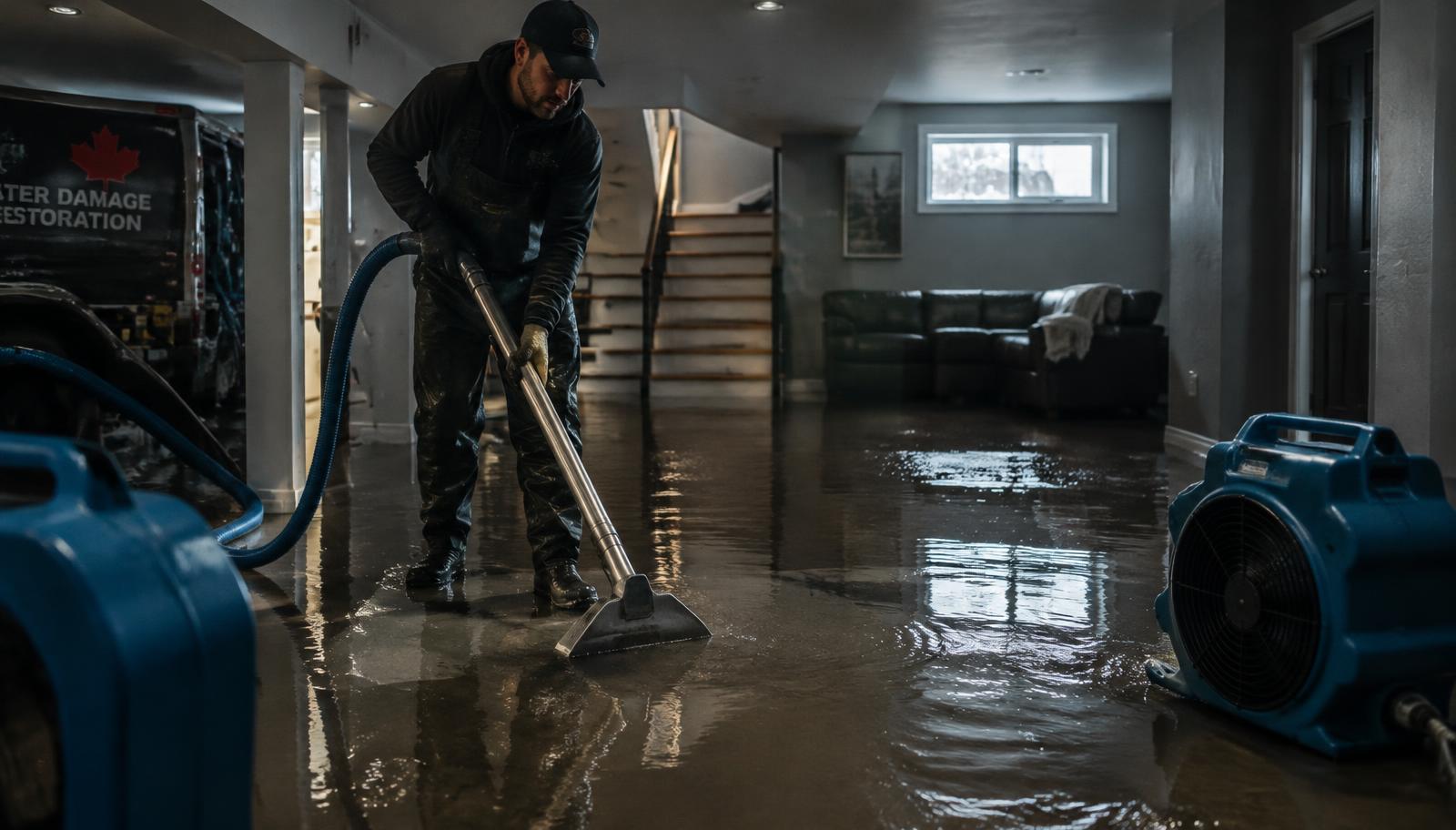
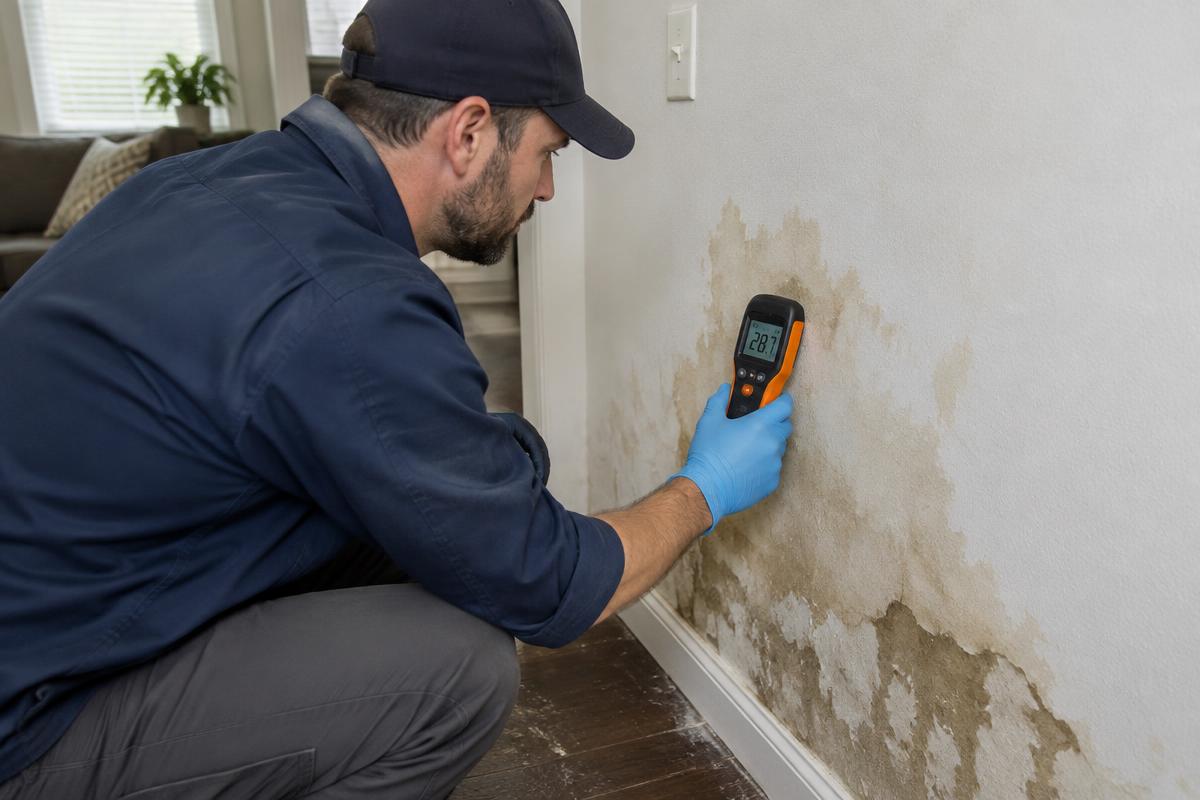
After water is removed, building materials still hold moisture. Wood framing, subfloors, drywall and concrete can stay damp for a long time if left to dry naturally, especially in basements with limited airflow.
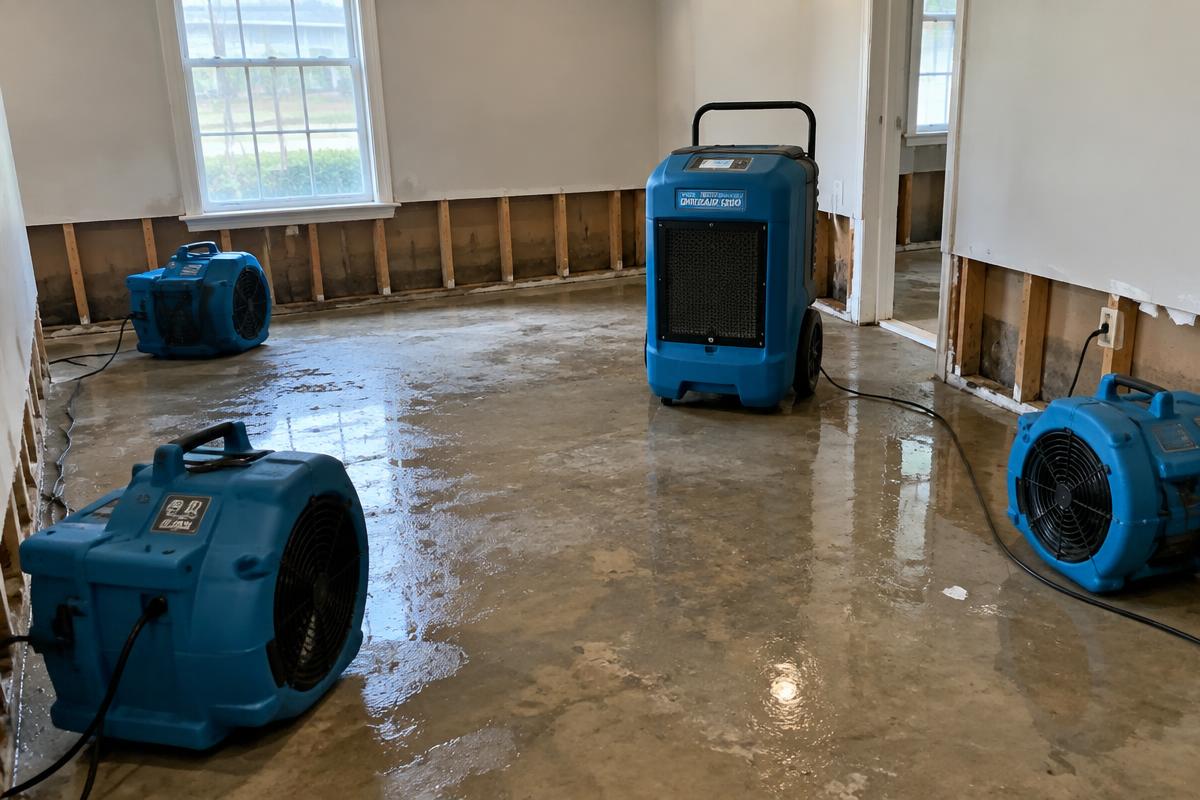
Structural drying uses air movers and dehumidifiers to pull moisture out of materials in a controlled way. Readings are taken during the process so drying is based on measurements rather than guesswork.
Materials we commonly dry
- Wood framing and subfloors
- Drywall and plaster walls
- Concrete basement floors
- Hardwood flooring, where conditions allow
- Cabinet bases and wall cavities
How the process works
- 1
Baseline readings
Moisture in affected and unaffected materials is measured for comparison.
- 2
Equipment setup
Air movers and dehumidifiers are placed for the size and layout of the space.
- 3
Monitoring
Readings are taken during drying and equipment is adjusted as needed.
- 4
Confirm dry
Drying continues until materials reach acceptable moisture levels.
- 5
Remove equipment
Equipment is removed and next steps are discussed.
Safety information
- Leave drying equipment running unless advised otherwise. Turning it off can slow drying.
- Keep doors and windows as recommended to support the drying environment.
- Keep cords clear of walkways to avoid trips.
Serving Kitchener properties
Kitchener's humid summers can slow drying in basements and enclosed spaces, which is why dehumidification is an important part of the process.
Have questions or need help now? Contact us, explore all our services, or return to the homepage.