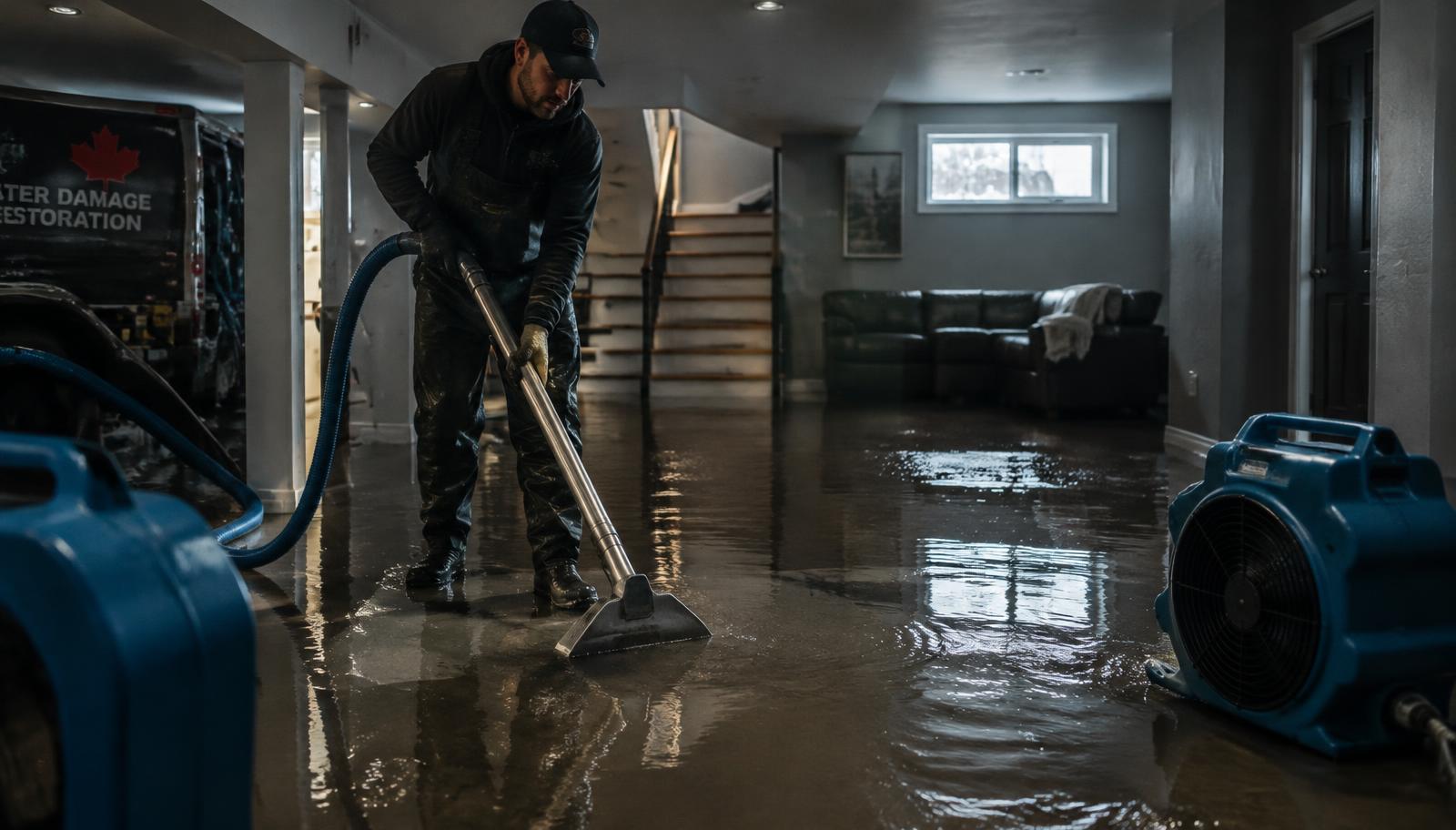
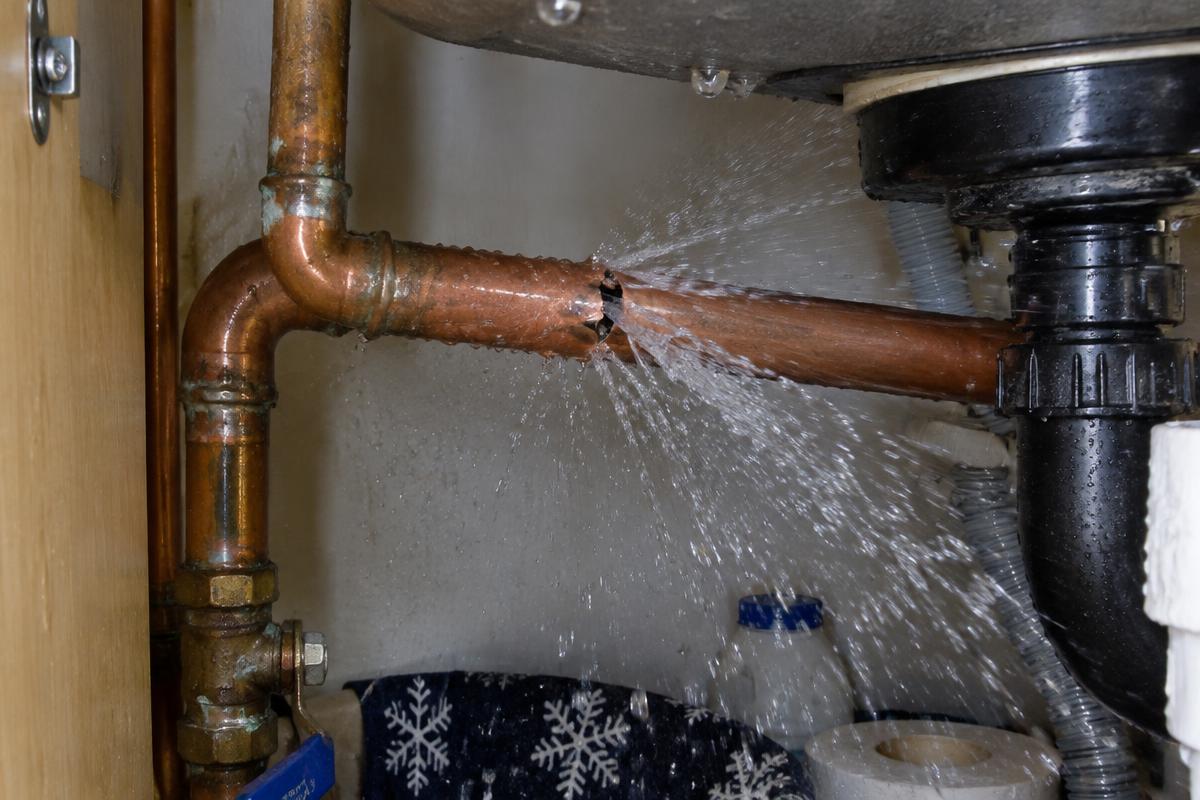
A burst pipe can release a large volume of water in a short time. Because pipes run inside walls and ceilings, the damage is often spread across more than one room and floor before anyone notices.
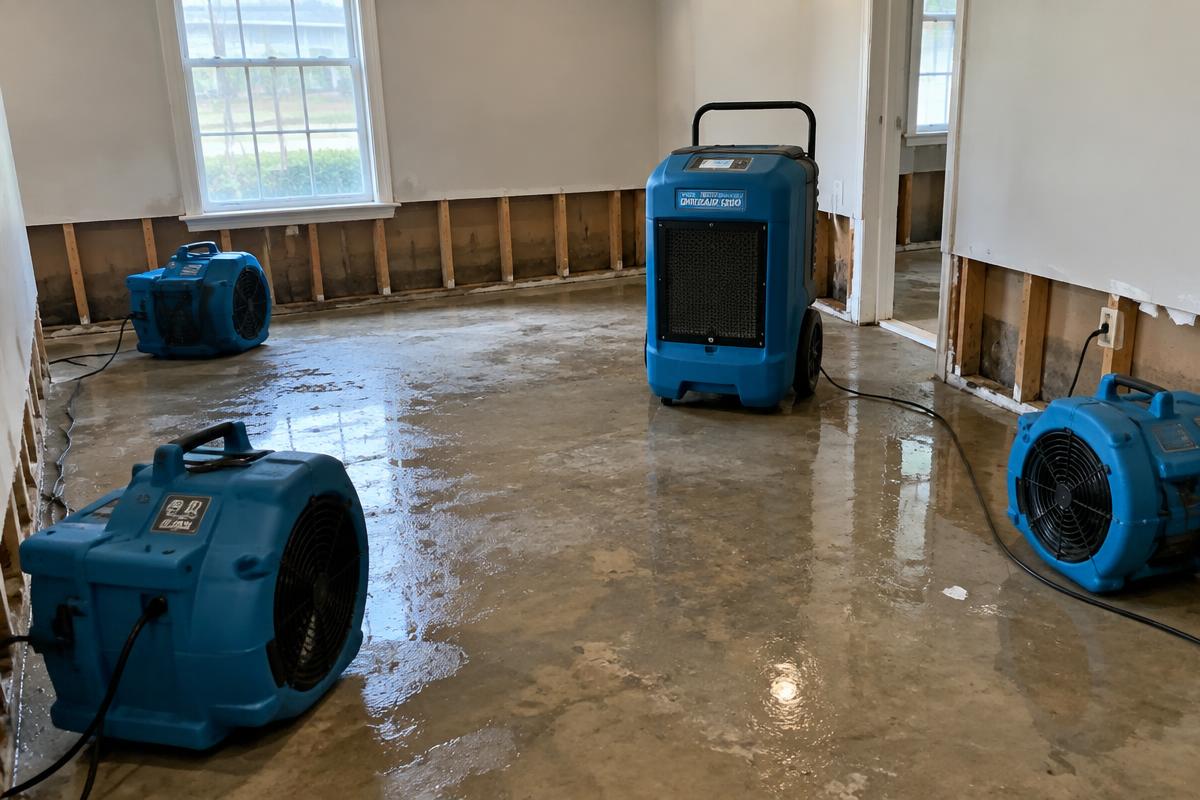
Once the water supply is shut off and a plumber has repaired the pipe, we focus on removing water, drying hidden cavities and cleaning the affected areas.
Why pipes burst
- Freezing in exterior walls, garages or unheated crawlspaces
- Homes left unheated while owners travel in winter
- Corroded or aging pipes and fittings
- High water pressure
- Damaged supply lines to sinks, toilets and appliances
How the process works
- 1
Stop the water
Shut off the main valve and arrange a plumbing repair.
- 2
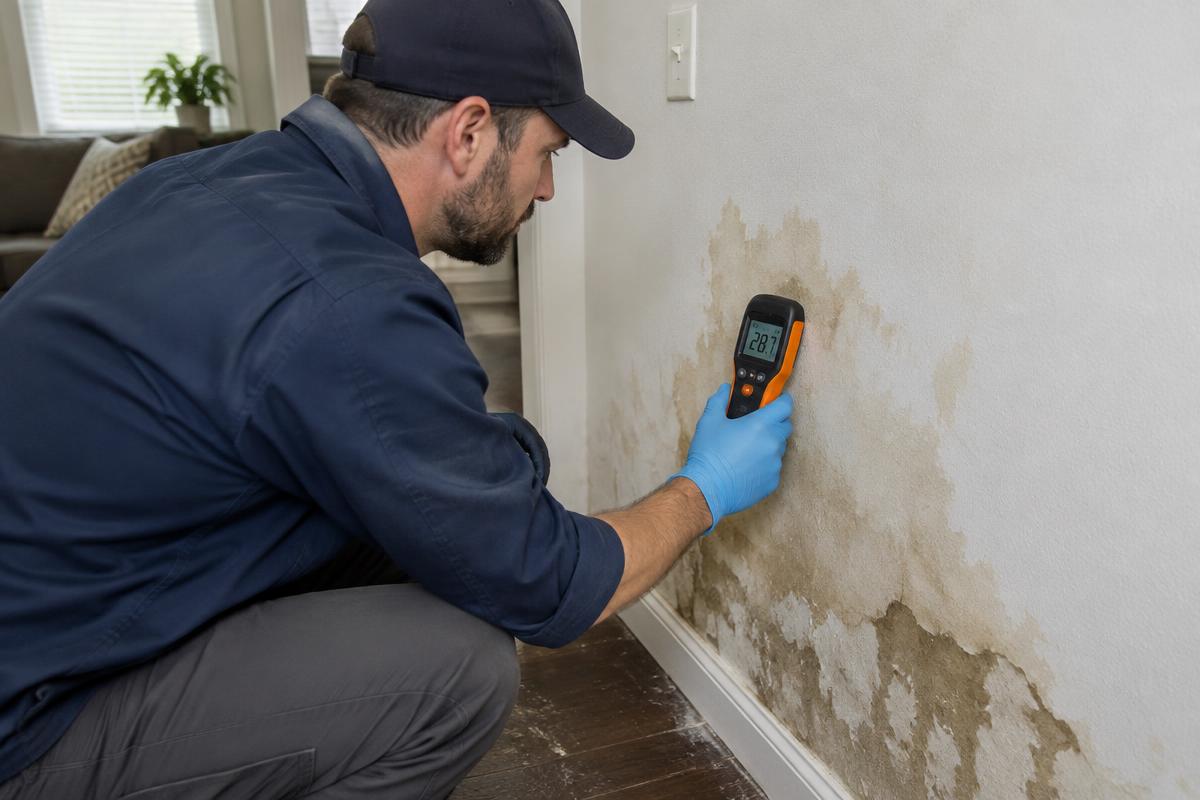
Trace the moisture
Moisture meters help find water inside walls and ceilings.
- 3
Extract and open up
Standing water is removed and cavities may be opened to allow drying.
- 4
Dry
Drying equipment targets walls, ceilings and subfloors.
- 5
Clean and plan repairs
Affected areas are cleaned and the repair scope is outlined.
Safety information
- Know where your main water shut-off valve is before an emergency happens.
- Water leaking through a ceiling can make drywall heavy and cause it to collapse. Stay out from under sagging ceilings.
- Turn off power to areas where water is near light fixtures or outlets.
Serving Kitchener properties
Ontario winters regularly bring stretches of deep cold to Kitchener. Pipes in exterior walls, older homes with limited insulation and cottages or properties left empty are particularly at risk.
Have questions or need help now? Contact us, explore all our services, or return to the homepage.