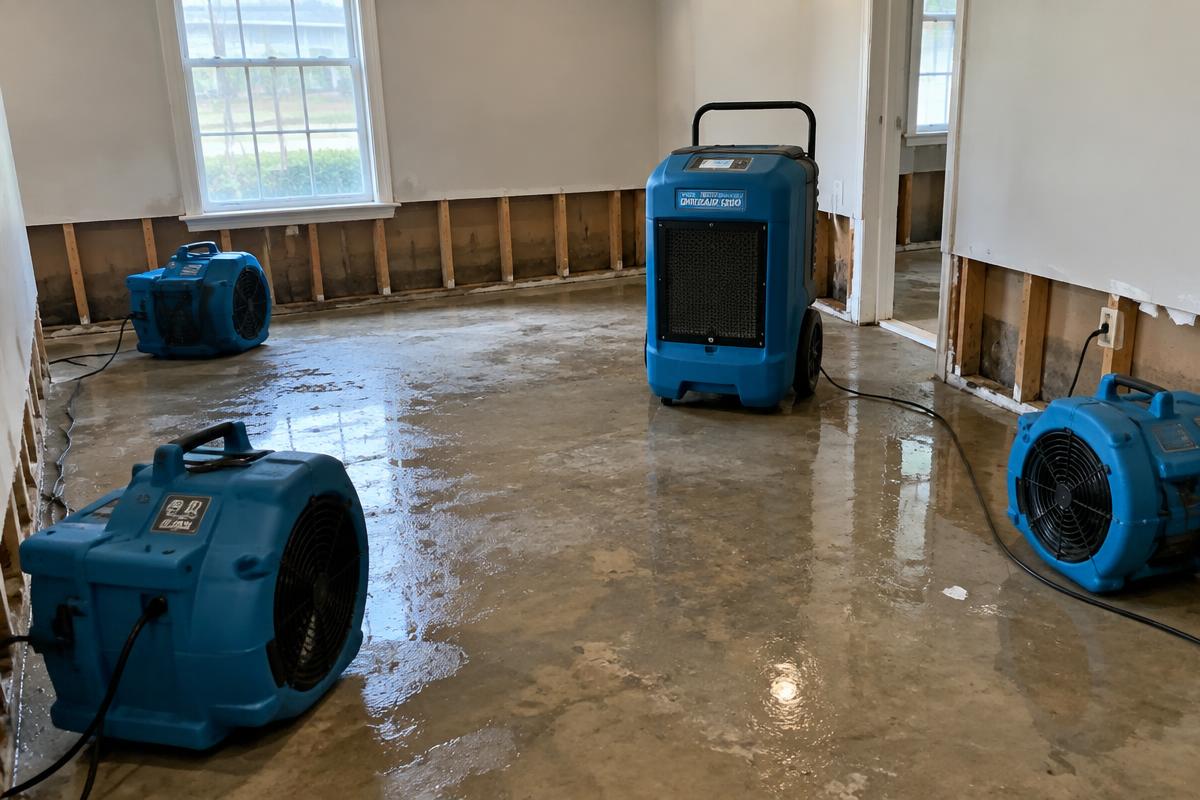
Removing standing water is the first step in limiting damage. The longer water sits, the more it soaks into subfloors, baseboards and walls, which lengthens drying time and increases the chance materials will need to be replaced.
We use extraction equipment suited to the amount of water and the surface, from carpet extraction to pumping out deeper water in basements.
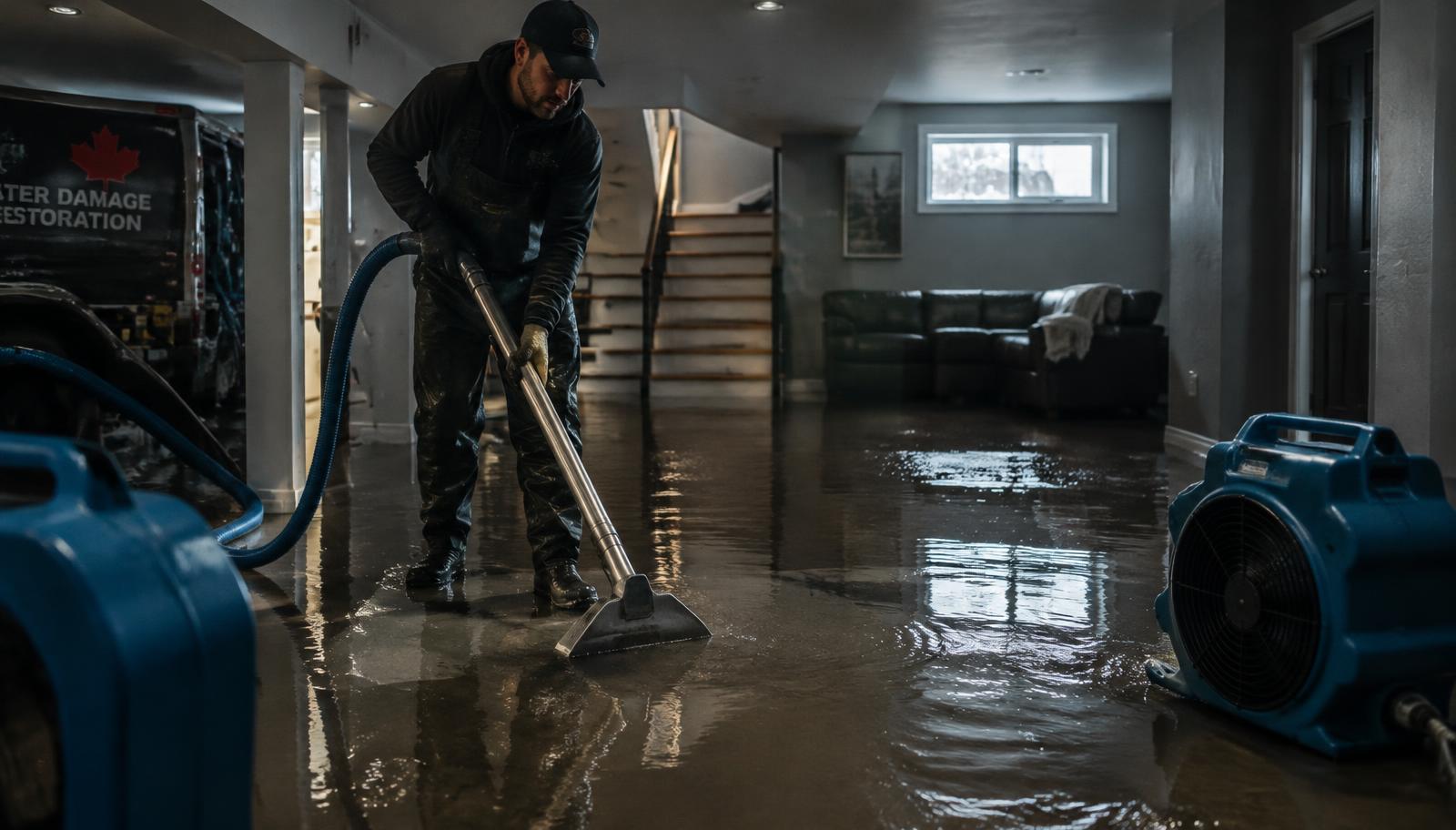
When extraction is needed
- Standing water on any floor of the property
- Saturated carpet and underpad
- Water pooled after a plumbing failure
- Flooded crawlspaces and utility rooms
- Commercial spaces affected by leaks or sprinkler activation
How the process works
- 1
Evaluate
The depth, spread and type of water are assessed.
- 2
Pump
Deeper water is pumped out where needed.
- 3
Extract
Extraction tools remove water from carpets and hard surfaces.
- 4
Measure
Moisture readings show where water has travelled.
- 5
Prepare for drying
Drying equipment is set up based on the readings.
Safety information
- Keep away from standing water if electricity may be involved.
- Do not use a household vacuum to remove water.
- Avoid lifting heavy wet items such as rugs or furniture without help.
Serving Kitchener properties
In Kitchener, water extraction calls often spike after spring thaws and summer storms, when many basements are affected at once.
Have questions or need help now? Contact us, explore all our services, or return to the homepage.